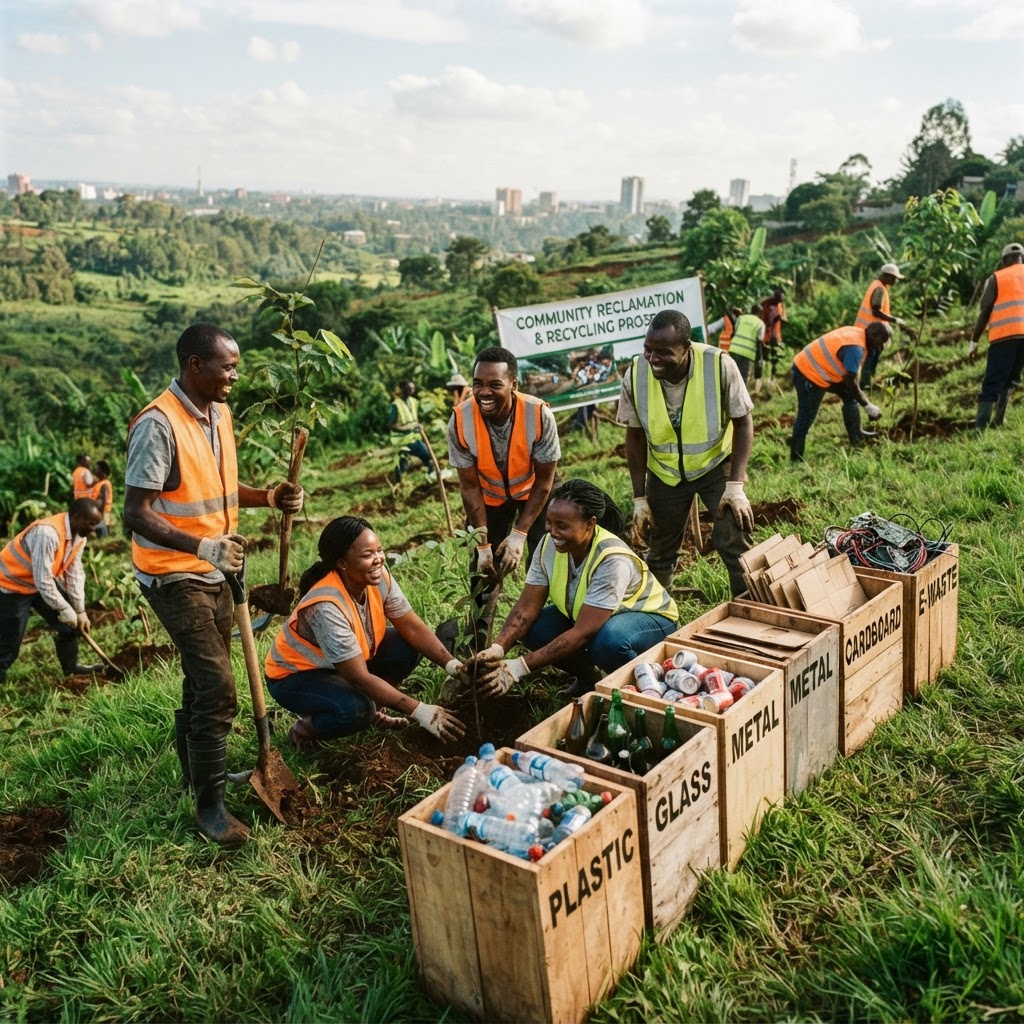
Turning Waste Streams into Resource Opportunities.
Recycling represents a fundamental shift in how society thinks about waste — creating opportunities to recover materials and return them to productive use.
Recycling represents a fundamental shift in how society thinks about waste. Instead of treating every discarded material as something with no further value, recycling creates opportunities to recover materials and return them to productive use.
Motion Concepts Projects & Developments is positioning recycling within a broader resource-management strategy.
The focus is not simply on collecting recyclable materials. It is on understanding what materials exist, how they move through the waste stream, how they can be separated and what opportunities exist for recovery and reuse.
A material's journey doesn't end at the bin.
The same material that leaves a site as waste can be sorted, processed and returned as something useful again.


From sorting to recovery to reuse.
Why Recycling Matters
Many materials entering waste streams still contain useful value. Recovering those materials can reduce unnecessary disposal and support more efficient use of resources. Recycling can contribute to:
- →Material recovery
- →Resource efficiency
- →Waste reduction
- →Reuse
- →Circular economy systems
- →More responsible resource management
Material Streams
Depending on operational capability and project requirements, recycling and material recovery can involve streams such as:
- →Plastic
- →Paper
- →Cardboard
- →Metal
- →Glass
- →Organic materials
- →Suitable construction-related materials
The website must only identify materials that Motion Concepts actually handles as an active service. Other material streams can be presented as future opportunities or project-development areas.
Sorting
Sorting is a critical stage in material recovery. Different materials need to be separated so that they can move into appropriate recovery or recycling pathways. This may involve:
- →Collection systems
- →Manual sorting
- →Mechanical processes
- →Material separation
- →Storage
- →Transportation
The exact process depends on the material and facility involved.
Material Recovery
Recovery is about identifying useful materials within waste streams and redirecting them toward productive use where technically and commercially appropriate.
This creates the possibility of moving from disposal, toward recovery, and ultimately reuse.
Recycling & Industry
Recycling should not only be viewed as a household environmental activity. Businesses and industries generate significant material streams:
- →Construction
- →Manufacturing
- →Commercial operations
- →Industrial environments
- →Property developments
These environments can create opportunities for more structured material recovery. Motion Concepts can therefore position recycling as part of a wider environmental service offering.
Recycling & the Circular Economy
Recycling is an important component of the circular economy, but it is not the entire circular economy. The larger objective is to keep useful materials in productive use for as long as possible. This means thinking about:
- →Reduction
- →Reuse
- →Recovery
- →Recycling
- →Regeneration
A simple representation of the system.
Generate
Collect
Sort
Process
Recover
Reuse
As Motion Concepts grows, opportunities may exist to develop or participate in larger material-recovery systems.
- →Material recovery facilities
- →Advanced sorting
- →Recycling infrastructure
- →Processing facilities
- →Industrial partnerships
- →Resource-recovery projects
These should be presented as development opportunities, not as existing facilities unless they are already operational.
Recycling changes the question from "How do we get rid of this?" to "What value remains in this material?" That shift is central to the future of environmental management.