Designing Systems Where Resources Stay in Use.
The circular economy represents the broader direction beyond traditional waste management — asking how resources can remain useful for longer.
The circular economy represents the broader direction beyond traditional waste management.
A conventional system often follows: Extract → Produce → Use → Dispose. Resources are taken from the environment, transformed into products, consumed and eventually discarded.
The circular economy asks a different question: How can resources remain useful for longer?
Motion Concepts views circular economy thinking as an opportunity to rethink the relationship between waste, materials, water, energy and infrastructure.
A broader resource cycle.
From Waste Management to Resource Management
Traditional waste management focuses primarily on the safe and efficient management of waste. Circular economy thinking expands the conversation. It asks:
- →What can be reduced?
- →What can be reused?
- →What can be repaired?
- →What can be recovered?
- →What can be recycled?
- →What resources can be returned to productive use?
This is the direction in which environmental systems are increasingly moving.
Resource Recovery
Resource recovery involves identifying useful materials, energy or other resources within waste streams and finding appropriate pathways for their recovery. Potential areas include:
Material recovery
Recovering valuable materials from waste.
Organic recovery
Managing organic waste streams for potential reuse or further processing.
Water recovery
Exploring opportunities to recover and reuse water where appropriate.
Energy recovery
Exploring opportunities for energy generation from suitable waste or organic resource streams.
These areas should always be approached according to technical feasibility, environmental requirements and commercial viability.
Circular Economy & Waste
Waste management becomes one component of a larger resource cycle. For example:
- →Organic waste may have recovery potential
- →Recyclable materials may return to manufacturing
- →Water may potentially be treated and reused
- →Certain waste streams may have energy-recovery potential
- →Construction materials may have opportunities for recovery and reuse
The exact solution depends on the material, technology, infrastructure and regulatory environment.
Circular Economy & Business
Circularity is not only an environmental concept. It can influence how businesses think about:
- →Resources
- →Procurement
- →Materials
- →Operations
- →Waste
- →Supply chains
- →Product life cycles
- →Infrastructure
Motion Concepts can therefore work toward environmental solutions that connect operational waste management with broader resource-efficiency opportunities.
Circular Infrastructure
The long-term opportunity lies in developing infrastructure that supports resource cycles. Potential future areas include:
- →Material recovery facilities
- →Recycling infrastructure
- →Organic waste processing
- →Resource recovery facilities
- →Water recovery systems
- →Energy recovery
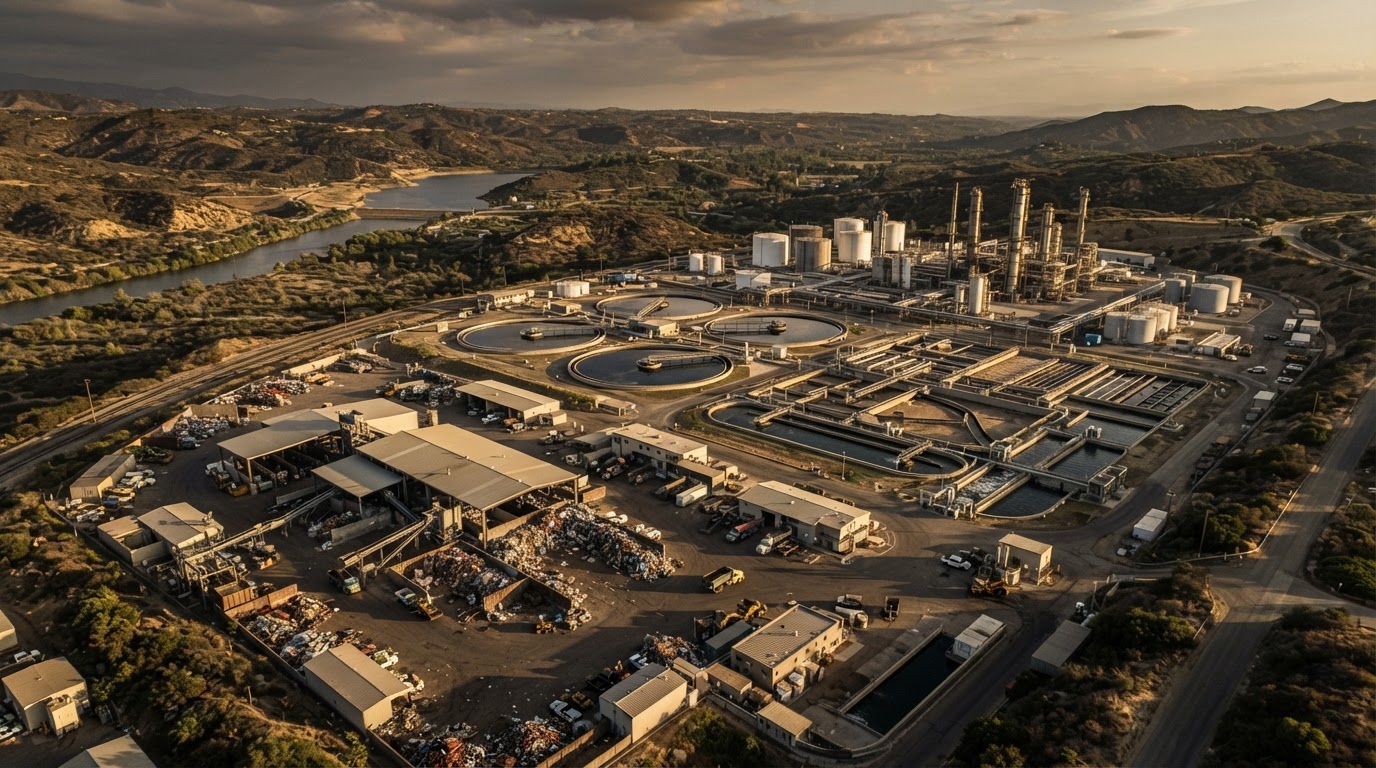
- →Integrated environmental hubs
These are areas for future development and project exploration, not claims of existing infrastructure unless confirmed.
Why Circularity Matters
The world cannot continue treating every resource as disposable. A more resilient environmental system requires greater attention to:
- →Efficiency
- →Recovery
- →Reuse
- →Regeneration
- →Responsible consumption
The circular economy provides a framework for thinking differently about what happens after a product has been used.
The system can continue rather than ending with disposal.
Use
Recover
Process
Reuse
Regenerate
Motion Concepts' long-term environmental direction is therefore not simply "Collect more waste." It is: "Understand the material, manage it responsibly, recover what can be recovered, and create pathways toward a more circular resource system."
That is the foundation on which future environmental infrastructure can be built.